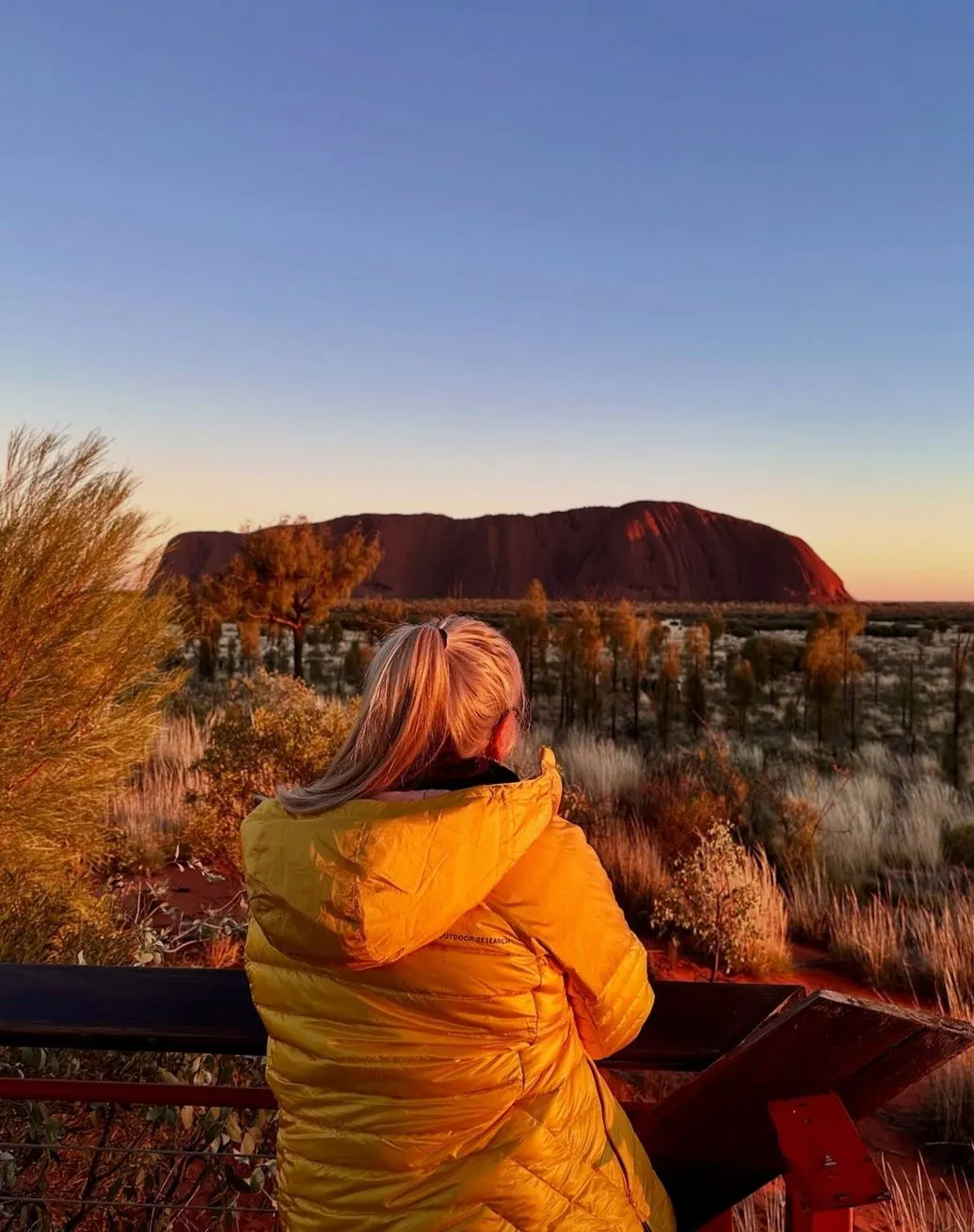
Is Two Nights Enough for Uluru and Kata Tjuta, or Do I Need Three?
Loads of travellers come to me before booking their Uluru Tours and ask the same exact question – and fair enough – the Red Centre looks pretty compact on a map, but once you’re out here under that massive desert sky, you get a feel for just how different time moves here. In this piece, I’m going to break down whether two nights is enough to take in Uluru and Kata Tjuta, or if three nights are needed for a real experience, based on the years I’ve spent running tours with Autopia Tours, Wildlife Tours & Wayoutback Tours.
Contents
- 1 Getting a Feel for Where You Are in the Red Centre
- 2 How Much Can You See in Two Nights?
- 3 My Take
- 4 The Rhythm of a Three-Day Immersion
- 5 Timing and Seasons: Pick Your Moment
- 6 Costs and Logistics: Budget Like a Local
- 7 Getting Around: Shuttle, Rent a Car Or Go on a Tour?
- 8 Cultural Respect and Rock Art
- 9 Wildlife, weather & What to Pack
- 10 Tips from the Road
- 11 The Verdict: Two Nights or Three?
- 12 Final Word from Paul Beames
- 13 FAQ
Getting a Feel for Where You Are in the Red Centre

Uluru-Kata Tjuta National Park is smack bang in the middle of Australia’s desert country, about a 450-kilometre drive southwest of Alice Springs. The park covers over 1,300 square kilometres of land that’s so old it’s been recognised by UNESCO for its natural and cultural significance. When you’re here, be prepared for some wild swings in temperature – from 3°C at dawn to 38°C by mid-afternoon – so pack right and don’t forget your travel insurance either, because even a tiny stubbed toe could leave you stuck on a long trip to the nearest hospital.
The flora and fauna here are pretty amazing too – desert oaks, mulga scrub, hopping mice & perentie lizards – it’s a tough but beautiful system, so be sure to stick to the tracks & follow the rangers’ advice.
How Much Can You See in Two Nights?
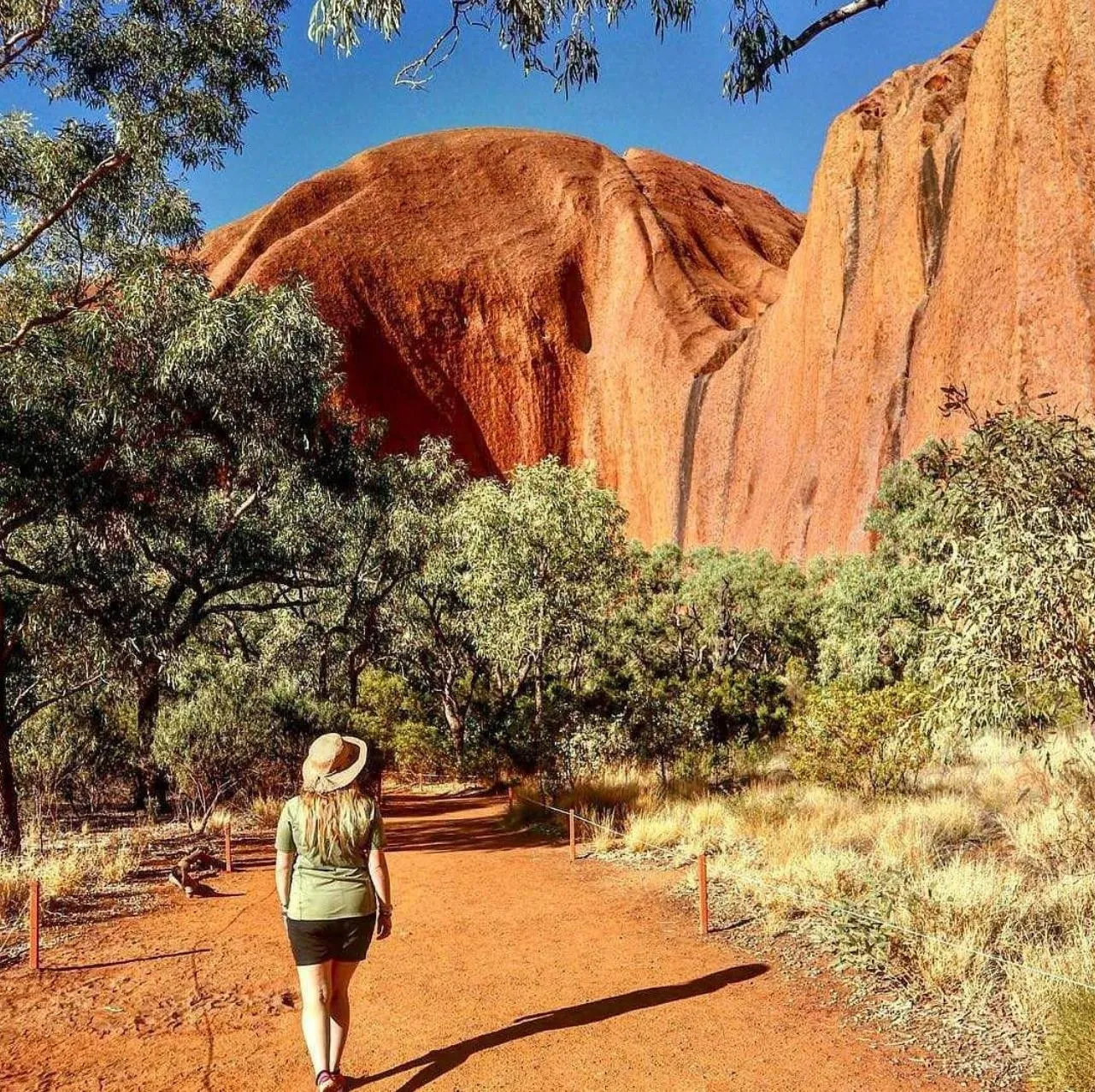
Spending two nights in the park’s definitely doable, but you’ll need to plan pretty carefully to make the most of it. You can see the main attractions, but you’ll have to be in a bit of a rush.
Here’s how a two-night itinerary stacks up against a three-night stay.
| Experience | 2-Night Trip | 3-Night Trip |
|---|---|---|
| Sunrise at Uluru | ✔ Iconic but rushed – one morning only | ✔✔ Can see it twice from different angles |
| Base Walk (10.6 km) | ✔ If you start early | ✔ With time to linger and hear ranger talks |
| Kata Tjuta (Domed Valley Walk) | ✔ Short version only | ✔✔ Full Valley of the Winds circuit |
| Cultural Centre & Art Gallery | ✖ Often skipped | ✔ Relaxed visit with time to browse |
| Scenic Flight over Uluru & Kata Tjuta | ✖ Tight schedule | ✔ Easily fits one morning |
| Night Sky Stargazing | ✔ Optional | ✔✔ Extra night gives time to slow down |
| Downtime or Pool Dip | ✖ None | ✔ Trust me, you’ll want it |
My Take
If you’re visiting Uluru for the first time, you can probably get away with a two-night trip – just long enough to catch a sunrise and do the standard base walk, and maybe even squeeze in a visit to Kata Tjuta. But be honest – you’ll end up spending most of your time checking the clock rather than actually taking in the breathtaking views. That’s because with just two nights, you don’t have the space to really breathe, to explore and feel the place rather than just ticking it off on your to-do list.
The Rhythm of a Three-Day Immersion
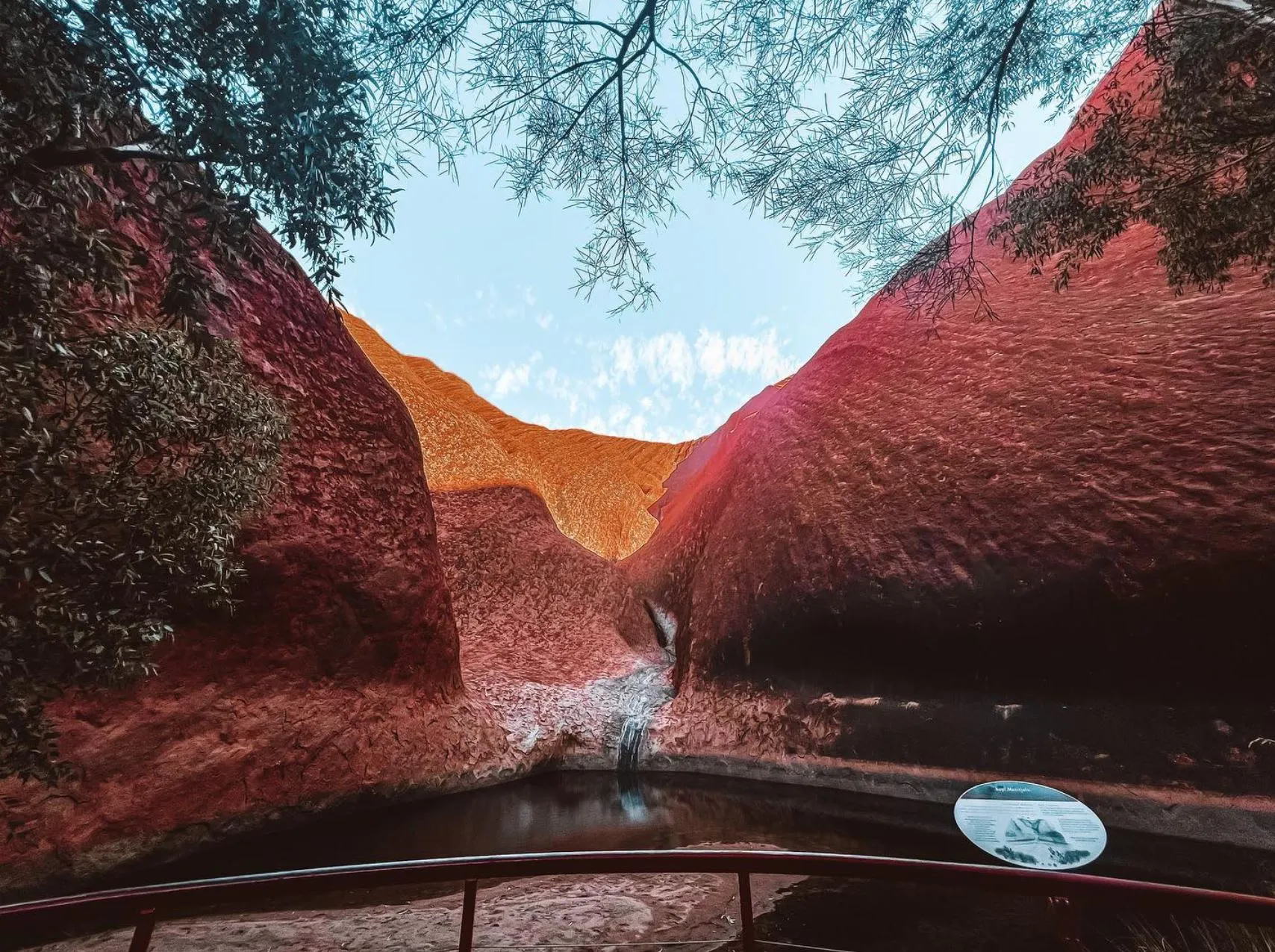
Three nights in Uluru lets you start to scratch beneath the surface – and that’s when the magic really starts to happen.
You can actually squeeze in both a sunrise and sunset visit, wander into the art gallery in the Cultural Centre, take a guided tour with an Anangu ranger and give the longer Valley of the Winds track a go through Kata Tjuta. And that extra time also allows you to treat yourself to a scenic flight – and let me tell you, it’s a real rush seeing just how enormous this desert landscape is from up high.
One of my absolute favourite ways to spend that extra day is to head over to the Mutitjulu Waterhole and learn about the Kuniya Tjukurpa story from the Traditional Owners. It completely changes your perspective on Uluru – it’s so much more than just a big rock, it’s a living, breathing storybook.
Timing and Seasons: Pick Your Moment
The Red Centre basically has two seasons – the cooler, drier months (May to September) and the sizzling hot dry months (October to April).
The cooler months are perfect for walking, but you will need to be prepared for some chilly nights – grab a beanie before you go !
Summer is the exact opposite – heat and flies by the bucketload. But don’t worry, the tour operators adjust their schedules to suit – earlier starts and longer naps in the shade in summer, a more relaxed pace in winter.
Whatever time you choose to go, you’ll still need a national park pass (about $38 per adult for three days) to get in and explore both Uluru and Kata Tjuta.
Costs and Logistics: Budget Like a Local
The Red Centre isn’t exactly the kind of place where you can just rock up and expect to get by on a shoestring – it’s not cheap. But trust us, it’s worth every penny. Here’s a rough idea of what you’ll need to budget for.
| Expense | Average Cost (AUD) | Notes |
|---|---|---|
| National Park Pass | $38 (3 days) | Mandatory for entry |
| Scenic Flight (20–30 min) | $180 – $300 | Weather-dependent, worth it |
| Uluru Tours (2–3 days) | $550 – $950 | Includes guides, meals, and camping |
| Shuttle Bus (Airport ↔ Resort) | $20 – $40 | Each way |
| Accommodation (Yulara) | $45 – $400 per night | From dorms to resorts |
| Travel Insurance | $50 – $100 | Cover remote medical |
| Coffee & Cold Beer | $6 – $12 | You’ll need both |
Pro tip: get your supplies from the IGA at Yulara Village before heading out into the national park, & book your scenic flight well in advance – seats are snapped up quicker than a cold one at the pub at sundown.
Getting Around: Shuttle, Rent a Car Or Go on a Tour?
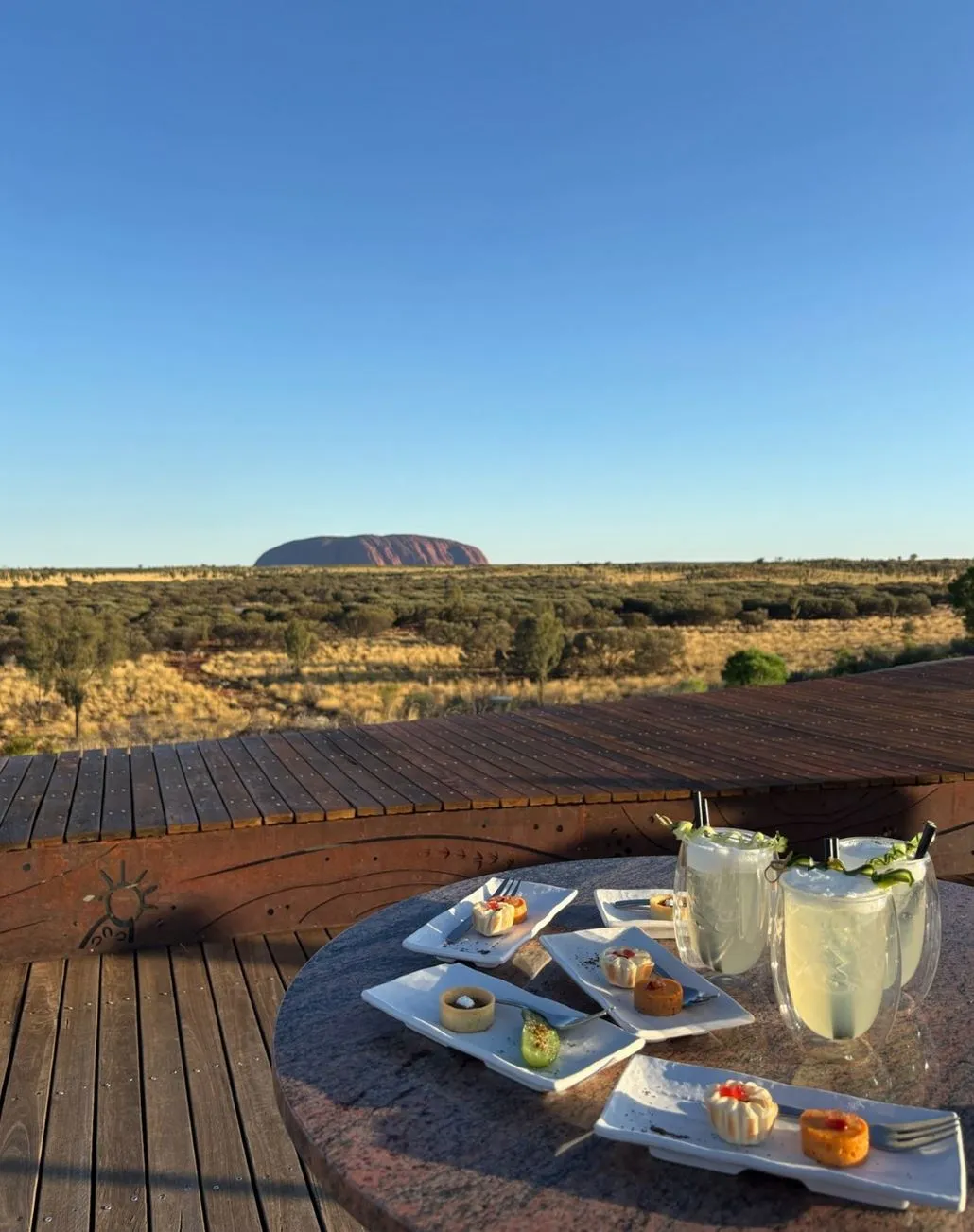
You have a few good options for getting around this place.
-
Shuttle Bus
There are regular shuttles running between Yulara Village, the tour office, and Uluru-Kata Tjuta National Park, & they’re dead easy & pretty cheap. The catch is that you’re not exactly in charge of the schedule. -
Hire a Car
Getting around with wheels gives you a bit more freedom, but don’t be fooled by the distances on a map – Uluru to Kata Tjuta is a 50km trip each way, & the road can be closed off when the weather turns nasty. -
Guided Uluru Tours
There are heaps of operators like Autopia Tours, Wildlife Tours, & Wayoutback Tours who will take care of the lot for you – tent, food, permits, & all that jazz. Their guides know the good spots for watching the sunset, where to find the best views, & where to catch a glimpse of the local wildlife. Going on one of these tours is also a great way to get a deeper understanding of the area’s history & the cultural significance of the place from someone who actually knows what they’re talking about.
Cultural Respect and Rock Art
Uluru & Kata Tjuta are still an active part of the Anangu people’s culture, & they’ve been taking care of this land for over 60,000 years. Climbing the rock is a no-go zone – & rightly so.
Instead of trying to climb Uluru, head to the Cultural Centre’s art gallery to see some amazing works by local artists, & learn some of the traditional techniques that’ve been passed down through the generations. You’ll also get to see some of the stunning rock art panels near Mutitjulu Waterhole – some of which are thousands of years old – & get a glimpse into one of the oldest continuous cultures in the world.
Just take it from the rangers – their advice isn’t just a list of dos & don’ts – it’s how we show respect for this land & the people who’ve called it home for so long.
Wildlife, weather & What to Pack
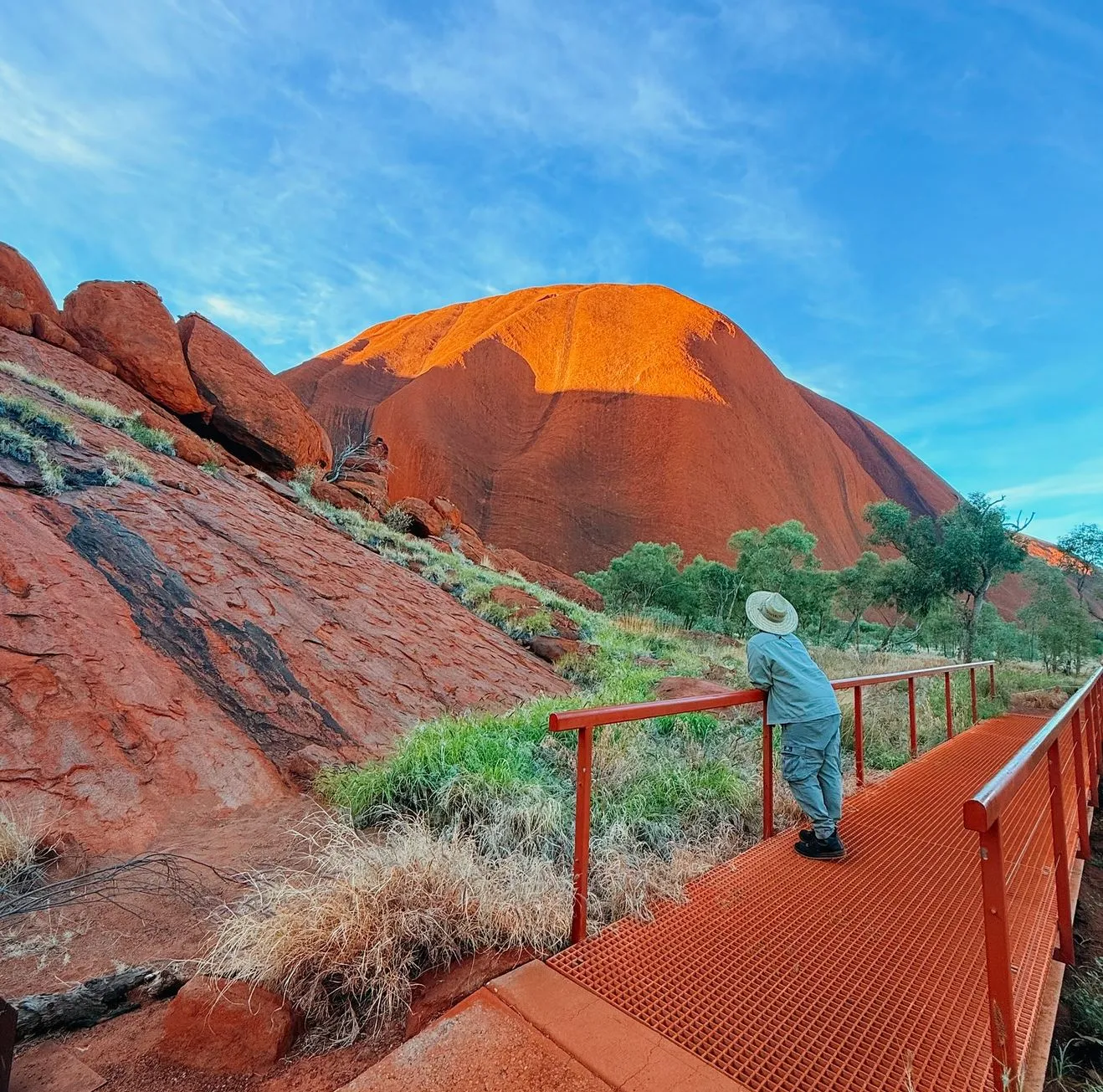
Every season brings its own special thing. After a bloody big summer storm, the wildflowers just erupt across the red sand – and it’s worth putting up with the humidity and mozzies for. Out in the dry, you’ll spot camels, dingoes, and wedge-tailed eagles just cruising around up in the thermals.
Packing list :
- A good broad-brimmed hat, heaps of sunscreen and a fly net to save yourself
- A refillable water bottle that’s a good 3 litres minimum for when you’re doing long walks
- Sturdy boots and some light layers to keep you comfy
- A park pass, some ID and your travel insurance documents to keep all your bases covered
- A torch, a power bank for your phone and a bit of patience when the dust gets up
As I tell my groups on Uluru Tours – the more prepared you are the more you’ll be able to get out of it – the more comfortable you are the more you’ll connect with the place.
Tips from the Road
A few things I’ve learned over the years :
- Book early – Yulara gets filled up months in advance during the dry season
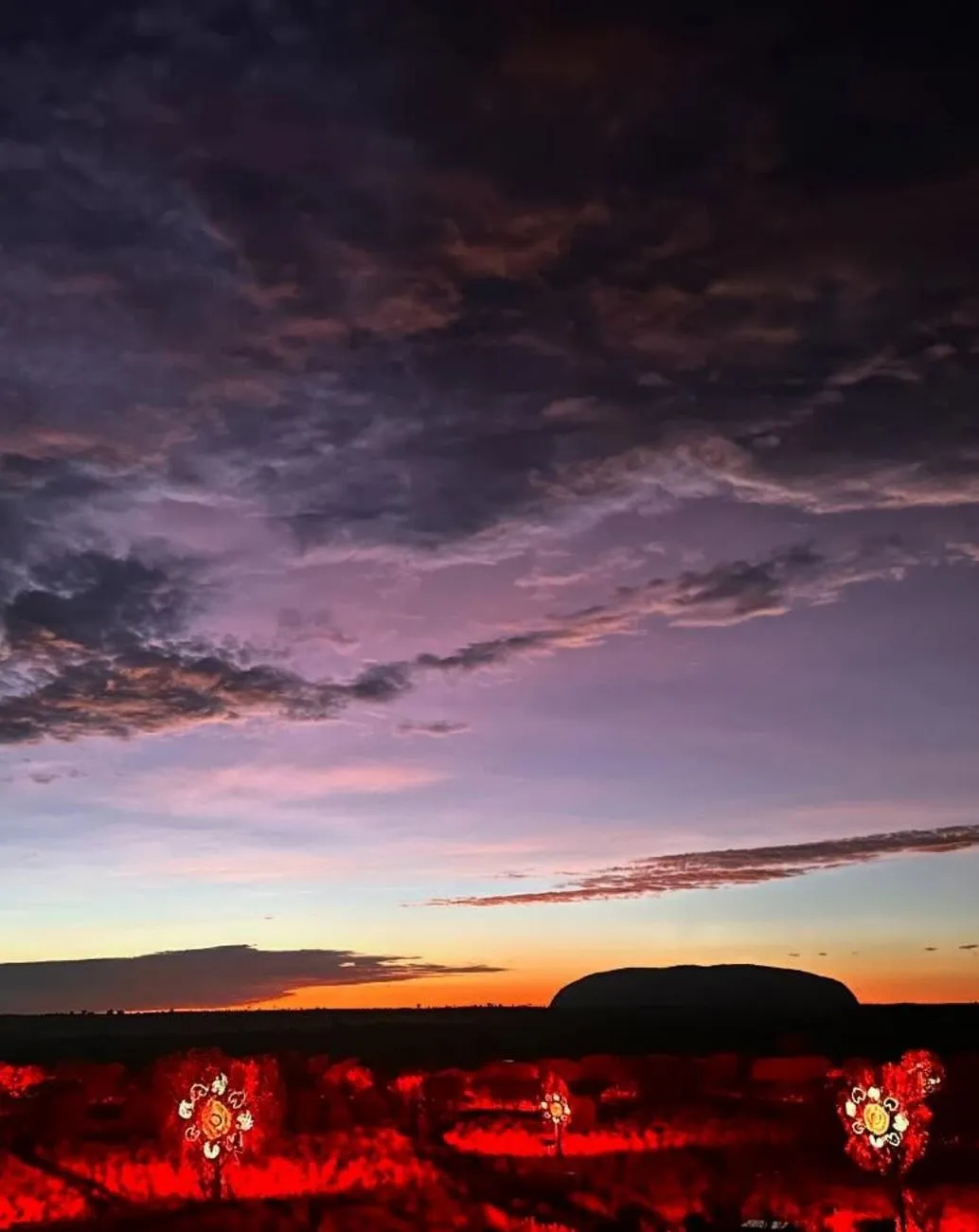
- Stick around for the Field of Light – Bruce Munro’s solar installation is just surreal after dark
- Have a chinwag with the guides – the rangers and drivers have more stories than a country pub
- Be respectful of photography rules – some of the sacred sites can’t be photographed, the signage makes that pretty clear
If you can, add an extra night and let the desert just take its time and wrap you in its arms. It’s not a place you rush; it’s a place you soak up – the slower you go, the more you’ll get out of it.
The Verdict: Two Nights or Three?
If you are short on time, two nights can give you the highlights – sunrise, base walk and a quick squiz at Kata Tjuta. But if you really want to get to understand why Uluru-Kata Tjuta National Park is more than just a postcard, then three nights make all the difference.
Think of it like this – the difference between looking at a painting and spending a bit of time in the art gallery where it was created. With an extra day, you aren’t just visiting; you are experiencing – you are walking with the rangers, meeting the Traditional Owners, watching the light change on the desert – it’s the sort of memory that sticks longer than the dust on your boots.
Final Word from Paul Beames
After all these years guiding people through the Outback, I’ve learned this: Uluru doesn’t reveal itself to people in a hurry. Two nights will show you the sights; three nights will show you the spirit.
So if you can, take that extra day — slow down, breathe the desert air and let the silence speak. You’ll leave with red dust in your shoes and something even better in your memory.
FAQ
Do I need a car to get around Uluru and Kata Tjuta?
Not necessarily. A shuttle bus and guided Uluru Tours cover most of the highlights, but a hire car gives you flexibility if you like to wander at your own pace.
Is travel insurance really necessary?
Absolutely. The nearest hospital is hours away. Even minor mishaps can be expensive without travel insurance.
Can I visit the Art Gallery without a park pass?
No — the Cultural Centre and its Art Gallery are inside Uluru-Kata Tjuta National Park, so you’ll need a valid pass to get in.
What’s the best time for a scenic flight?
Early morning is best for calm air and soft light. Book your scenic flight at least a day in advance through your tour office or accommodation desk.
Will I see wildlife in the desert?
Yes — the flora and fauna are surprisingly diverse. Emus, dingoes and plenty of reptiles. At dusk, keep an eye out for hopping mice and desert birds chasing insects.

Related Posts
Which Great Barrier Reef Island Should You Visit First?
Is Alice Springs Safe at Night?